Crawl Space Mold Remediation in Baton Rouge, LA
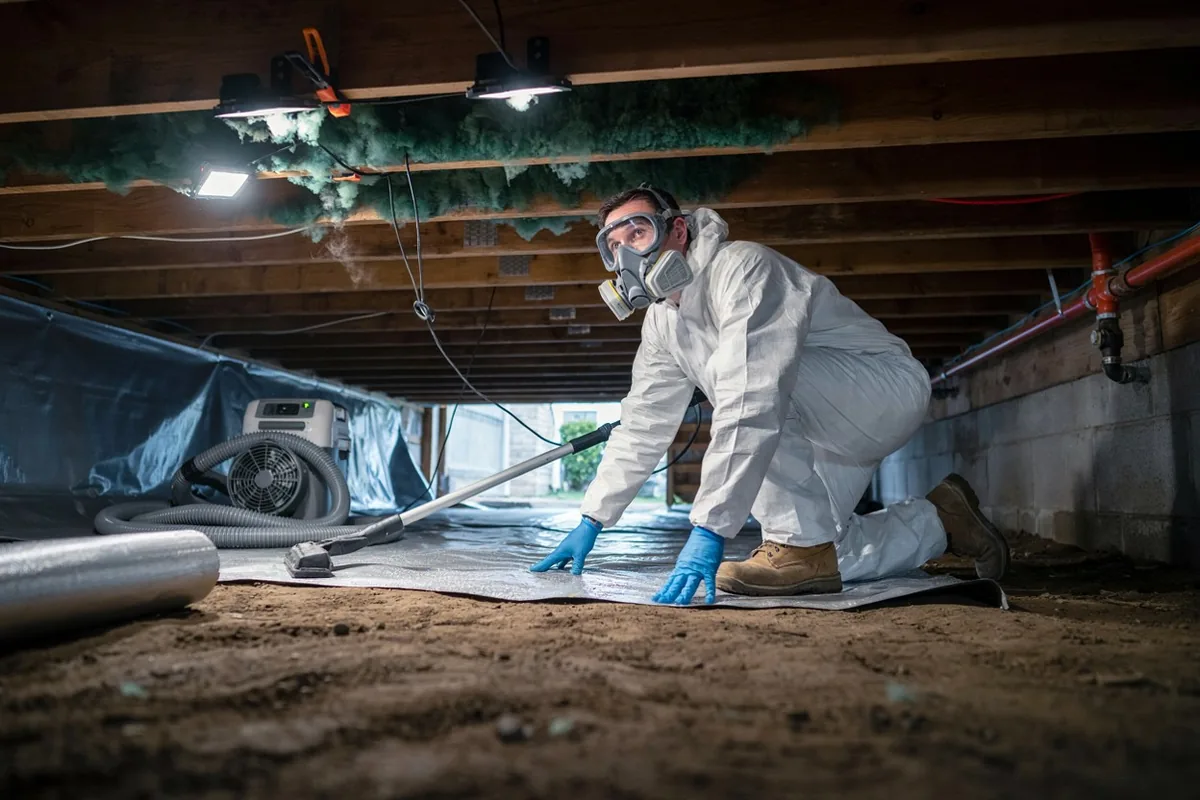
Older Baton Rouge houses sit on piers, and under the floor is a space that never sees sun, holds every bit of the city’s humidity, and takes water every time the yard floods. A musty smell that comes up through the floor, a soft spot near a bathroom, or a plumber who came out from under the house and said the joists don’t look good — those are crawl space calls. Call and tell us what you’re noticing.
What the work looks like
We go under with a light and a moisture meter and map the growth on joists, subfloor, and any insulation between them. We seal the access and put the space under negative pressure so the work doesn’t push spores up through the floor. Joists and subfloor stay and get cleaned in place; wet insulation comes out, bagged. LSU AgCenter’s guidance is that wood should read below twenty percent moisture, ideally fifteen, before anything closes back up.
Why it comes back under the house
- The space is still wet: grading that sends water under the house, a plumbing leak, vents that let in summer air that condenses on cold pipes, no vapor barrier on the dirt.
- Removal without addressing that is a repeat job.
- We tell you what we see under there and what has to change for the cleaning to hold.
Tell Us What You See, 24/7
Baton Rouge notes
The raised cottages and bungalows in Mid City, the Garden District, Old Goodwood, and Spanish Town are the classic case. So is any house near a drainage canal that took water in 2016 and was dried from the top. What sits under the floor doesn’t dry on its own here.